Round Cello Wolftone Eliminator
Cello · Wolf Tone Eliminator
Round brass eliminator,
a quieter alternative on the after-length.
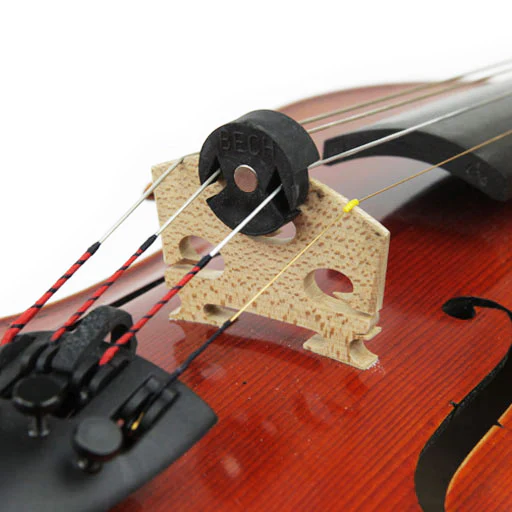
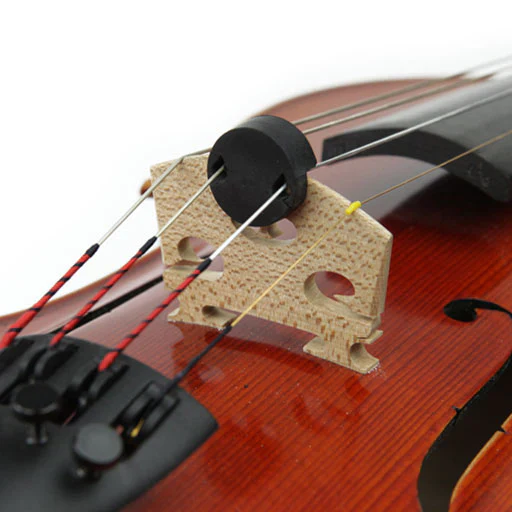
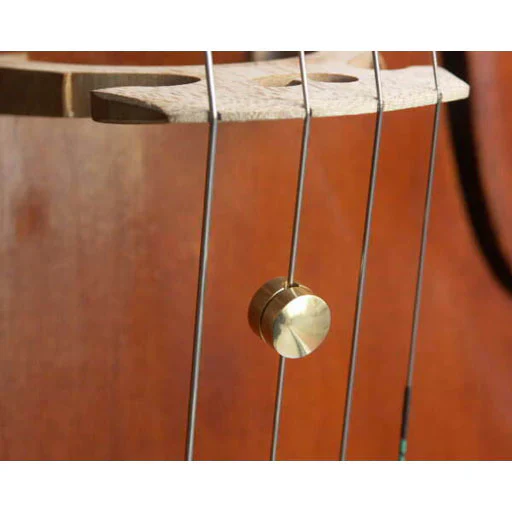
A round brass tube with an interior rubber sleeve and a mounting screw. Fits around the string that produces the wolf note — typically the G — below the bridge, where it shifts the resonance enough to settle the wolf.
What it does
Mass on the after-length.
The wolf is the body's own resonance fighting the bowed string. Adding a small mass to the string between the bridge and the tailpiece shifts the resonant frequency by a tiny amount — often enough that the wolf no longer locks in.
The position along the after-length is what does the work. Move the tube closer to the bridge for a stronger effect, further away for a milder one.
Construction
Brass, rubber, one screw.
The interior rubber sleeve sits against the string so the brass never touches it directly. A single screw tightens the tube into place. Loosen, slide, retighten — adjustment takes a moment.
Details
What you're buying.
| Type | Wolf tone eliminator, round tube |
|---|---|
| Tube | Brass |
| Sleeve | Interior rubber, protects the string |
| Fixing | Single mounting screw |
| Fits | Most cellos; typically the G string |
| Placement | On the after-length, between bridge and tailpiece |
Brass or chrome?
Largely cosmetic, occasionally tonal.
Players sometimes prefer brass for a slightly softer feel against the string, but both finishes do the same job. Email [email protected] if you want a quick steer.
Cello · Wolf Tone Eliminator
Round brass eliminator,
a quieter alternative on the after-length.
A round brass tube with an interior rubber sleeve and a mounting screw. Fits around the string that produces the wolf note — typically the G — below the bridge, where it shifts the resonance enough to settle the wolf.
What it does
Mass on the after-length.
The wolf is the body's own resonance fighting the bowed string. Adding a small mass to the string between the bridge and the tailpiece shifts the resonant frequency by a tiny amount — often enough that the wolf no longer locks in.
The position along the after-length is what does the work. Move the tube closer to the bridge for a stronger effect, further away for a milder one.
Construction
Brass, rubber, one screw.
The interior rubber sleeve sits against the string so the brass never touches it directly. A single screw tightens the tube into place. Loosen, slide, retighten — adjustment takes a moment.
Details
What you're buying.
| Type | Wolf tone eliminator, round tube |
|---|---|
| Tube | Brass |
| Sleeve | Interior rubber, protects the string |
| Fixing | Single mounting screw |
| Fits | Most cellos; typically the G string |
| Placement | On the after-length, between bridge and tailpiece |
Brass or chrome?
Largely cosmetic, occasionally tonal.
Players sometimes prefer brass for a slightly softer feel against the string, but both finishes do the same job. Email [email protected] if you want a quick steer.
Original: $25.91
-65%$25.91
$9.07Description
Cello · Wolf Tone Eliminator
Round brass eliminator,
a quieter alternative on the after-length.
A round brass tube with an interior rubber sleeve and a mounting screw. Fits around the string that produces the wolf note — typically the G — below the bridge, where it shifts the resonance enough to settle the wolf.
What it does
Mass on the after-length.
The wolf is the body's own resonance fighting the bowed string. Adding a small mass to the string between the bridge and the tailpiece shifts the resonant frequency by a tiny amount — often enough that the wolf no longer locks in.
The position along the after-length is what does the work. Move the tube closer to the bridge for a stronger effect, further away for a milder one.
Construction
Brass, rubber, one screw.
The interior rubber sleeve sits against the string so the brass never touches it directly. A single screw tightens the tube into place. Loosen, slide, retighten — adjustment takes a moment.
Details
What you're buying.
| Type | Wolf tone eliminator, round tube |
|---|---|
| Tube | Brass |
| Sleeve | Interior rubber, protects the string |
| Fixing | Single mounting screw |
| Fits | Most cellos; typically the G string |
| Placement | On the after-length, between bridge and tailpiece |
Brass or chrome?
Largely cosmetic, occasionally tonal.
Players sometimes prefer brass for a slightly softer feel against the string, but both finishes do the same job. Email [email protected] if you want a quick steer.