
Cello Wolftone Eliminator Chrome
Cello · Wolf Tone Eliminator
The chrome eliminator,
for the note that howls back.
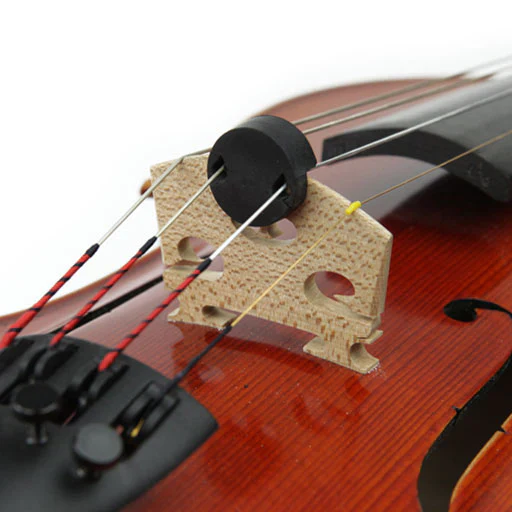
A chrome-plated tube with an interior rubber sleeve and a single mounting screw. Clamps onto the affected string between the bridge and tailpiece and quietens the wolf without changing your setup.
What it does
Detunes the body's resonance just enough.
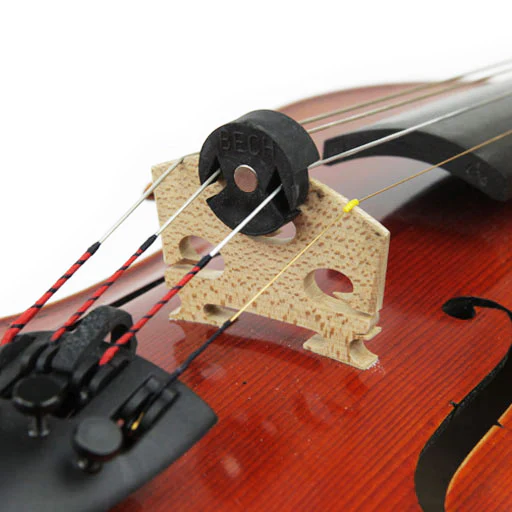
The wolf note happens when the body's own resonance fights the string. Adding a small mass to the after-length of the string (between bridge and tailpiece) shifts the resonance so it stops doubling up with that pitch. The eliminator is that small, adjustable mass.
Slide it closer to the bridge to lower the wolf's intensity; further away to soften the effect. Most cellists land somewhere within an inch of the bridge.
Installation
Five steps, no luthier required.
1. Loosen the screw and slide out the inner rubber sleeve. 2. Place the rubber sleeve on the affected string (typically the G string) between the bridge and tailpiece. 3. Slide the chrome tube over the rubber sleeve. 4. Tighten the screw to secure. 5. Adjust the position along the string until the wolf is minimised.
The rubber sleeve protects the string from contact with the metal.
Details
What you're buying.
| Type | Wolf tone eliminator, tube style |
|---|---|
| Tube | Chrome plated |
| Sleeve | Interior rubber, protects the string |
| Fixing | Single mounting screw |
| Fits | Most cellos; typically used on the G string |
| Best for | A persistent wolf note around F to G on the G string |
Chrome or brass?
Two finishes, same idea.
The chrome model is the standard. The round brass version has a slightly different feel and look. Either will do the job. Email [email protected] if you'd like help choosing.
Cello · Wolf Tone Eliminator
The chrome eliminator,
for the note that howls back.
A chrome-plated tube with an interior rubber sleeve and a single mounting screw. Clamps onto the affected string between the bridge and tailpiece and quietens the wolf without changing your setup.
What it does
Detunes the body's resonance just enough.
The wolf note happens when the body's own resonance fights the string. Adding a small mass to the after-length of the string (between bridge and tailpiece) shifts the resonance so it stops doubling up with that pitch. The eliminator is that small, adjustable mass.
Slide it closer to the bridge to lower the wolf's intensity; further away to soften the effect. Most cellists land somewhere within an inch of the bridge.
Installation
Five steps, no luthier required.
1. Loosen the screw and slide out the inner rubber sleeve. 2. Place the rubber sleeve on the affected string (typically the G string) between the bridge and tailpiece. 3. Slide the chrome tube over the rubber sleeve. 4. Tighten the screw to secure. 5. Adjust the position along the string until the wolf is minimised.
The rubber sleeve protects the string from contact with the metal.
Details
What you're buying.
| Type | Wolf tone eliminator, tube style |
|---|---|
| Tube | Chrome plated |
| Sleeve | Interior rubber, protects the string |
| Fixing | Single mounting screw |
| Fits | Most cellos; typically used on the G string |
| Best for | A persistent wolf note around F to G on the G string |
Chrome or brass?
Two finishes, same idea.
The chrome model is the standard. The round brass version has a slightly different feel and look. Either will do the job. Email [email protected] if you'd like help choosing.
Original: $6.91
-65%$6.91
$2.42Description
Cello · Wolf Tone Eliminator
The chrome eliminator,
for the note that howls back.
A chrome-plated tube with an interior rubber sleeve and a single mounting screw. Clamps onto the affected string between the bridge and tailpiece and quietens the wolf without changing your setup.
What it does
Detunes the body's resonance just enough.
The wolf note happens when the body's own resonance fights the string. Adding a small mass to the after-length of the string (between bridge and tailpiece) shifts the resonance so it stops doubling up with that pitch. The eliminator is that small, adjustable mass.
Slide it closer to the bridge to lower the wolf's intensity; further away to soften the effect. Most cellists land somewhere within an inch of the bridge.
Installation
Five steps, no luthier required.
1. Loosen the screw and slide out the inner rubber sleeve. 2. Place the rubber sleeve on the affected string (typically the G string) between the bridge and tailpiece. 3. Slide the chrome tube over the rubber sleeve. 4. Tighten the screw to secure. 5. Adjust the position along the string until the wolf is minimised.
The rubber sleeve protects the string from contact with the metal.
Details
What you're buying.
| Type | Wolf tone eliminator, tube style |
|---|---|
| Tube | Chrome plated |
| Sleeve | Interior rubber, protects the string |
| Fixing | Single mounting screw |
| Fits | Most cellos; typically used on the G string |
| Best for | A persistent wolf note around F to G on the G string |
Chrome or brass?
Two finishes, same idea.
The chrome model is the standard. The round brass version has a slightly different feel and look. Either will do the job. Email [email protected] if you'd like help choosing.